
Histoires de la Flotte: Rowdy, le NY40 qui n'a jamais changé de nom
%2019.12.40.png/v1/fill/w_320,h_320/file.jpg)
Lancé en 1916 par Nathanael Herreshoff pour un sénateur new-yorkais, abandonné comme maison flottante en Californie, sauvé bordage après bordage et rendu à son gréement aurique d'origine après un démâtage à Imperia : la vie de Rowdy tient en cent dix ans de mer.
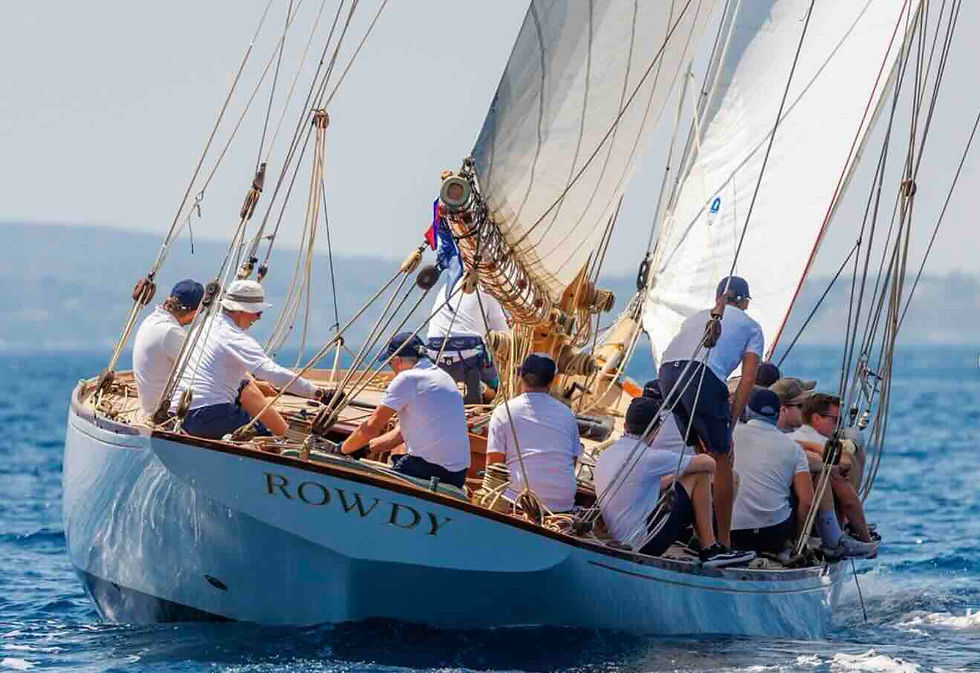
Il y a des bateaux qui changent de propriétaire, de pavillon, de gréement et même de nom comme on change de peau. Rowdy a presque tout changé, sauf l'essentiel. Depuis que Nathanael Greene Herreshoff l'a dessiné à Bristol, dans le Rhode Island, il y a plus d'un siècle, le voilier a traversé des guerres, des décennies d'oubli et un océan, mais il porte toujours sur son tableau arrière les cinq lettres de son baptême, et dans sa grand-voile le numéro NY 49. Il est le seul de sa série à pouvoir le dire.
Les « Fighting Forties » du sorcier de Bristol
En 1916, un groupe de membres du New York Yacht Club commanda à la Herreshoff Manufacturing Company une série de voiliers identiques pour régater entre eux à armes égales. Nathanael Herreshoff, le « sorcier de Bristol », était déjà une légende vivante : tous les defenders américains de la Coupe de l'America depuis 1893 étaient sortis de sa planche à dessin. Pour la nouvelle série, il conçut un voilier de quarante pieds à la flottaison — d'où son nom, New York 40 — et de près de vingt mètres de longueur hors tout, doté d'un intérieur pensé aussi pour la croisière.
Leur bau généreux et leur franc-bord élevé suscitèrent d'abord les critiques des puristes, habitués à des lignes plus effilées. Les régates se chargèrent de les faire taire. Les NY40 se révélèrent rapides, robustes et redoutables dans la Bermuda Race des années vingt, et on les surnomma bientôt les « Fighting Forties ». Les premières unités furent livrées sans beaupré ; constatant que le bateau était trop ardent, Herreshoff reprit ses plans, ajouta un beaupré de cinq pieds et redimensionna les focs. Quatorze furent construits. Quatre survivent aujourd'hui, et trois d'entre eux — Rowdy, Chinook et Marilee — régatent encore en Méditerranée.
Le bateau du sénateur Duell
Le 14 octobre 1915, l'avocat Holland Sackett Duell signa la commande de Rowdy : 10 000 dollars, plus 280 pour remplacer la barre franche par une roue. Duell était un personnage de roman. Descendant des pèlerins du Mayflower, il avait combattu pendant la Première Guerre mondiale comme officier d'artillerie, fut sénateur de l'État de New York et produisit même des films à Hollywood. En mai 1916, il prit possession du bateau et partit aussitôt régater.
Il le garda près d'un quart de siècle, la plus longue propriété d'origine de toute la série. Il remporta de nombreuses courses, dont les résultats paraissaient dans les pages du New York Times. Quand il s'en sépara, le nom resta à bord, et aucun des propriétaires suivants n'osa le changer.
Maison flottante en Californie
Vint ensuite un lent déclin. Rowdy navigua sur les Grands Lacs, traversa le continent et finit sur la côte californienne, où il servit même d'habitation flottante. À l'été 1998, Christopher Madsen, un navigateur de Santa Barbara, le découvrit dans un chantier d'Oxnard. La coque était si éprouvée — bordages pourris, calfatage défait, fixations rendues — que la pompe de cale tournait presque sans relâche pour le maintenir à flot.
Madsen l'acheta malgré tout. Pendant six ans, de 1998 à 2004, il consacra des journées de dix à quatorze heures à lui rendre sa forme d'origine. Tout en travaillant sur la coque, il se plongea dans les archives du Herreshoff Marine Museum et du MIT pour reconstituer la vie du sénateur Duell. De cette double restauration est né un livre, Rowdy, publié en 2015 et plusieurs fois primé.
De l'Atlantique à la Méditerranée
En 2006, le Britannique Graham Walker acheta le bateau et l'installa en Méditerranée. Ce fut le début de son âge d'or moderne. En 2008, il s'imposa dans sa catégorie lors de la course Mahon-Imperia et aux Vele d'Epoca d'Imperia, et remporta la classe Époque du Panerai Classic Yachts Challenge en 2008, 2010 et 2011. Durant ces années, Rowdy naviguait avec un gréement bermudien, avec lequel il devint l'un des classiques les plus titrés du circuit. À tel point que son succès inspira la reconstruction de son jumeau Chinook en Tunisie.
Walker finit d'ailleurs par acheter Chinook. En 2013, il vendit Rowdy à Howard et Donna Dyer, qui le basent au Real Club Náutico de Palma. Donna, qui apprit à naviguer enfant à bord d'un Swan au Venezuela et fit deux tours du monde avec son mari, en est aujourd'hui l'armatrice et la skipper. Comme elle le raconte elle-même, son mari dit que Rowdy est son bébé.
Le mistral d'Imperia
En 2022, lors des Vele d'Epoca d'Imperia, un coup de mistral soudain, avec des rafales proches de quarante nœuds, brisa le mât alors que la régate touchait à sa fin. Le moteur perdit aussi sa propulsion et le bateau se retrouva à la dérive. Personne ne fut blessé, mais Rowdy avait besoin d'un nouveau gréement.
Les Dyer auraient pu se contenter de remplacer le mât bermudien qui avait habillé le bateau pendant une quinzaine d'années. Ils choisirent le chemin le plus long : lui rendre le gréement aurique qu'Herreshoff avait dessiné pour lui.
Retour à l'aurique
Le capitaine Tim Goodbody mena une minutieuse enquête historique, avec l'appui du MIT, dépositaire des plans d'Herreshoff, et du musée de Bristol. Le chantier néerlandais Ventis construisit le mât, la bôme et la corne en épicéa de Sitka ; l'architecte navale allemande Julianne Hempel adapta les calculs aux charges des voiles modernes ; la société portugaise Absolute Projects fabriqua les ferrures d'après les dessins d'origine ; North Sails coupa les voiles et le majorquin Amazing Rigging se chargea du gréement.
Le changement imposa d'avancer l'emplanture de quatre-vingts centimètres, d'ouvrir un nouveau passage dans le pont, de renforcer les cadènes et de remplacer le pataras fixe par deux jeux de bastaques. Presque tout le reste demeura là où Herreshoff l'avait placé. « Cet homme était un génie », résume Goodbody.
Le mât arriva à Palma en juin 2024 et fut mis en place avec l'aide de STP et du Real Club Náutico de Palma. En août, Rowdy réapparut aux Illes Balears Clàssics du Club de Mar : sa première régate depuis 2022, avec un équipage qui apprenait, manœuvre après manœuvre, à mener un gréement d'un autre siècle.
Cent dix ans, en temps réel
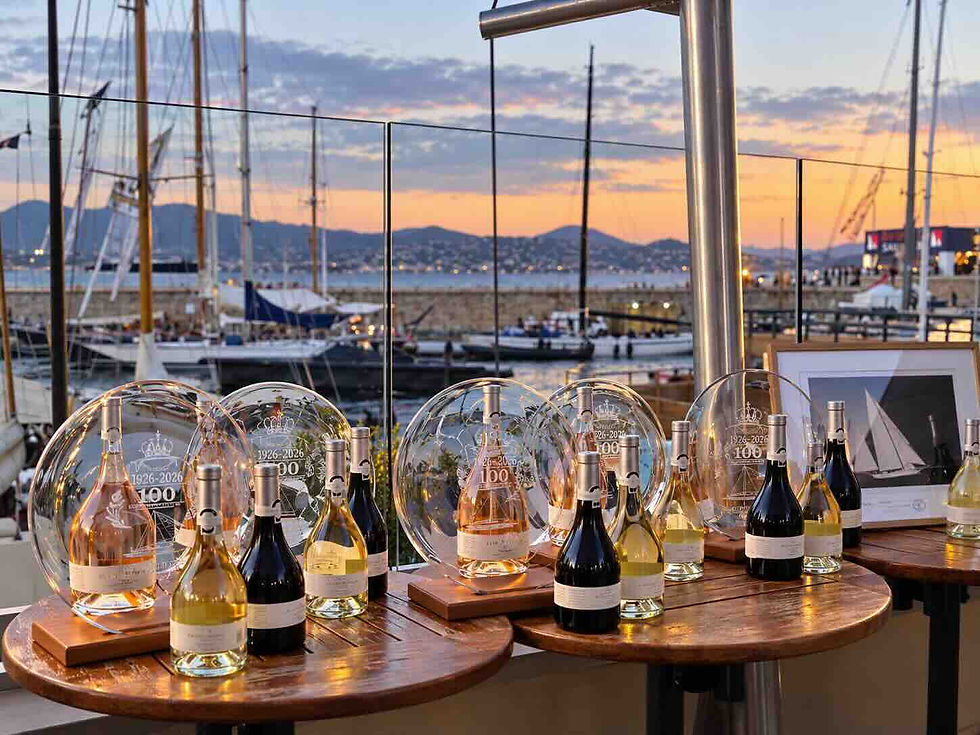
L'aurique fit passer Rowdy dans la catégorie Époque Aurique, où l'attendait son jumeau. Depuis, Rowdy et Chinook se mesurent presque en temps réel, séparés parfois de quelques secondes après des heures de course, et cette année Marilee, qui fêtait son centenaire, s'est jointe au duel. En 2026, Rowdy a remporté les trois manches des Illes Balears Clàssics et gagné les deux dernières courses de la Copa del Rey Repsol de Barcos de Época, à Mahon, où une disqualification lors de la première journée l'a relégué à la troisième place. La saison s'est conclue par le titre de la classe Époque Aurique du Trophée CIM 2026, remis à Saint-Tropez.
À bord, tout reste manuel et physique, rappelle Donna Dyer : chaque équipier a sa tâche et une seule erreur suffit à perdre la journée. C'est une autre façon de dire ce que Rowdy démontre chaque fois qu'il largue les amarres. Cent dix ans après sa première régate, le bateau du sénateur Duell ne navigue pas comme une pièce de musée, mais comme ce qu'Herreshoff voulait qu'il soit : un bateau fait pour se battre.
Rowdy, the NY40 that never changed her name

Launched in 1916 by Nathanael Herreshoff for a New York senator, left to decay as a houseboat in California, rescued plank by plank and returned to her original gaff rig after a dismasting in Imperia: Rowdy's life spans a hundred and ten years at sea.
Some boats change owners, flags, rigs and even names the way others shed a skin. Rowdy has changed almost everything except what matters. Since Nathanael Greene Herreshoff drew her in Bristol, Rhode Island, more than a century ago, she has come through wars, decades of neglect and an ocean crossing, yet her transom still carries the five letters she was launched with, and her mainsail the number NY 49. She is the only one of her class who can say so.
The Fighting Forties of the Wizard of Bristol
In 1916, a group of New York Yacht Club members commissioned a series of identical yachts from the Herreshoff Manufacturing Company so they could race each other on equal terms. Nathanael Herreshoff, the "Wizard of Bristol", was already a living legend: every American America's Cup defender since 1893 had come off his drawing board. For the new class he conceived a yacht forty feet on the waterline — hence the name, New York 40 — and nearly twenty metres overall, with an interior designed for cruising as well.
Their generous beam and high freeboard drew criticism at first from purists used to finer lines. The racing soon silenced them. The NY40s proved fast, tough and formidable in the Bermuda Races of the 1920s, and were quickly nicknamed the "Fighting Forties". The first boats were delivered without a bowsprit; finding they carried too much weather helm, Herreshoff redrew the plans, added a five-foot bowsprit and resized the headsails. Fourteen were built. Four survive today, and three of them — Rowdy, Chinook and Marilee — still race in the Mediterranean.
Senator Duell's yacht
On 14 October 1915, lawyer Holland Sackett Duell signed the order for Rowdy: 10,000 dollars, plus 280 to replace the tiller with a wheel. Duell was a character out of a novel. A descendant of the Mayflower pilgrims, he had served as an artillery officer in the First World War, became a New York State senator and even produced films in Hollywood. In May 1916 he took delivery of the boat and went straight out racing.
He kept her for nearly a quarter of a century, the longest original ownership in the whole class. He won many races, and his victories were reported in the pages of the New York Times. When he parted with her, the name stayed on board, and none of her later owners dared to change it.
A houseboat in California
What followed was a slow decline. Rowdy sailed the Great Lakes, crossed the continent and ended up on the California coast, where she even served as a floating home. In the summer of 1998, Christopher Madsen, a sailor from Santa Barbara, found her in a boatyard in Oxnard. The hull was in such a state — rotten planks, crumbling caulking, failing fastenings — that the bilge pump ran almost nonstop to keep her afloat.
Madsen bought her anyway. For six years, from 1998 to 2004, he worked ten- to fourteen-hour days to bring her back to her original form. While he worked on the hull, he also immersed himself in the archives of the Herreshoff Marine Museum and MIT to piece together Senator Duell's life. That double restoration produced a book, Rowdy, published in 2015 and awarded several prizes.
From the Atlantic to the Mediterranean
In 2006, Briton Graham Walker bought the yacht and moved her to the Mediterranean. It was the start of her modern golden age. In 2008 she won her category in the Mahón-Imperia race and at the Vele d'Epoca di Imperia, and she took the Vintage class of the Panerai Classic Yachts Challenge in 2008, 2010 and 2011. In those years Rowdy sailed with a Bermudan rig, and with it she became one of the most decorated classics on the circuit. So much so that her success inspired the rebuild of her twin, Chinook, in Tunisia.
Walker himself would go on to buy Chinook. In 2013 he sold Rowdy to Howard and Donna Dyer, who keep her based at the Real Club Náutico de Palma. Donna, who learned to sail as a child aboard a Swan in Venezuela and sailed around the world twice with her husband, is today her owner and skipper. As she tells it, her husband says Rowdy is her baby.
The mistral at Imperia
In 2022, during the Vele d'Epoca di Imperia, a sudden mistral with gusts close to forty knots broke the mast as the race was nearing its end. The engine also lost propulsion and the boat was left adrift. No one was hurt, but Rowdy needed a new rig.
The Dyers could simply have replaced the Bermudan mast she had carried for some fifteen years. They chose the long way round: to give her back the gaff rig Herreshoff had drawn for her.
Back to gaff
Captain Tim Goodbody led a painstaking historical investigation, supported by MIT, custodian of the Herreshoff plans, and by the Bristol museum. Dutch yard Ventis built the mast, boom and gaff in Sitka spruce; German naval architect Julianne Hempel adapted the calculations to the loads of modern sails; Portugal's Absolute Projects made the fittings from the original drawings; North Sails cut the sails and Mallorca-based Amazing Rigging handled the rigging.
The change meant moving the mast step eighty centimetres forward, cutting a new opening in the deck, reinforcing the chainplates and replacing the fixed backstay with two sets of runners. Almost everything else stayed where Herreshoff had put it. "That man was a genius," Goodbody sums up.
The mast reached Palma in June 2024 and was stepped with the help of STP and the Real Club Náutico de Palma. In August, Rowdy reappeared at the Illes Balears Clàssics at Club de Mar: her first regatta since 2022, with a crew learning, manoeuvre by manoeuvre, to handle a rig from another century.
A hundred and ten years, in real time
The gaff rig moved Rowdy into the Vintage Gaff class, where her twin was waiting. Since then Rowdy and Chinook have raced each other almost in real time, sometimes separated by seconds after hours on the course, and this year Marilee, celebrating her centenary, joined the duel. In 2026 Rowdy won all three races at the Illes Balears Clàssics and took the last two races of the Copa del Rey Repsol de Barcos de Época in Mahón, where a disqualification on the first day left her third overall. The season ended with the Vintage Gaff title of the 2026 CIM Trophy, presented in Saint-Tropez.
On board, everything is still manual and physical, as Donna Dyer points out: each crew member has a job, and a single mistake is enough to lose the day. It is another way of saying what Rowdy proves every time she casts off. A hundred and ten years after her first race, Senator Duell's yacht does not sail like a museum piece, but like what Herreshoff meant her to be: a boat built to fight.


Commentaires